Complex Regional Pain Syndrome Treatment
Complex Regional Pain Syndrome (CRPS) is a chronic pain condition that usually starts after an injury or surgery, even something minor. The body’s pain system doesn’t shut off the way it should, so the affected area keeps sending strong pain signals long after the injury has healed.
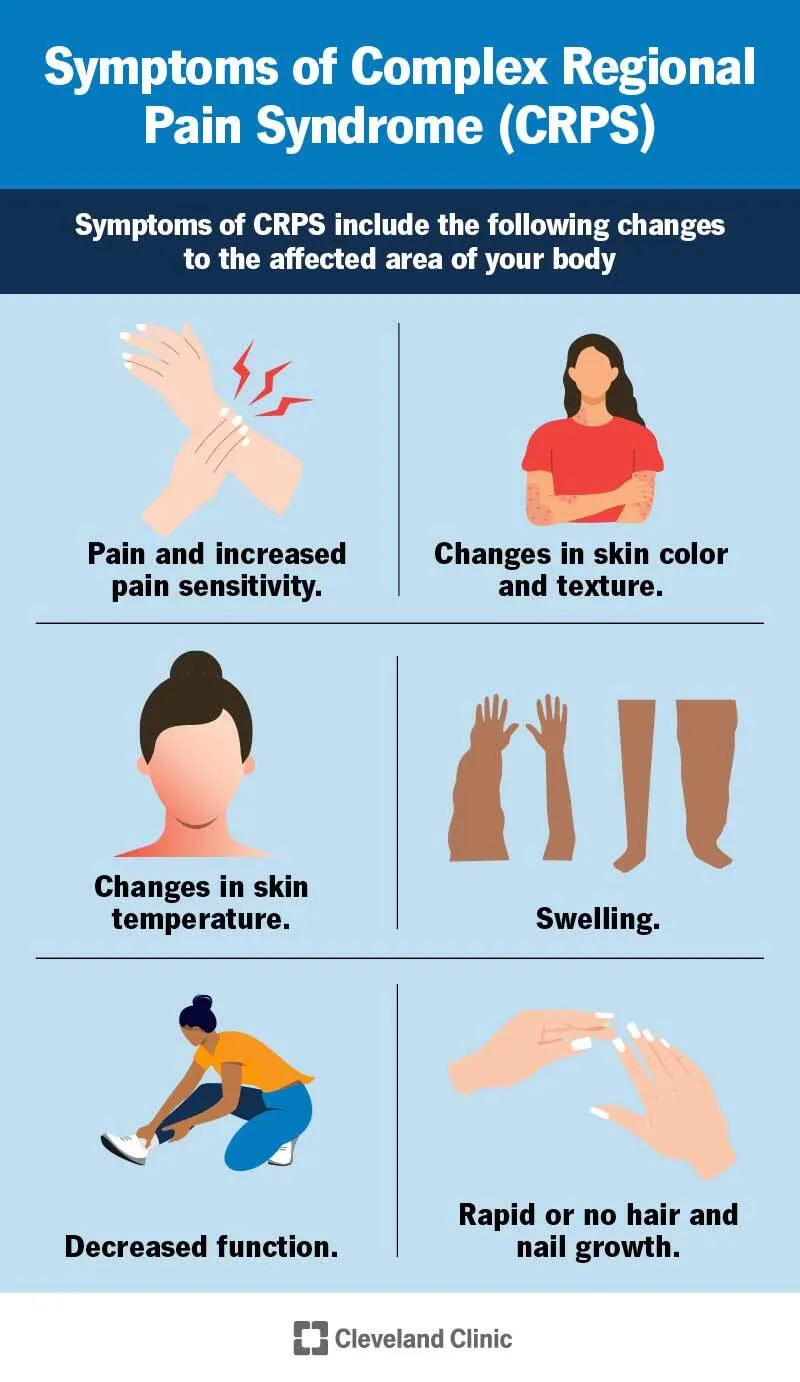
People with CRPS often have pain that is much worse than expected, along with symptoms like swelling, skin color or temperature changes, sweating, stiffness, and extreme sensitivity to touch. The pain can feel burning, stabbing, or electric.
How CRPS is treated
There’s no single cure, but treatment focuses on calming the nervous system and keeping the affected area moving:
- Physical therapy to improve movement and prevent stiffness
- Medications to reduce nerve pain and inflammation
- Nerve blocks or injections to calm pain signals
- Desensitization techniques to help the body tolerate touch again
- Neuromodulation (like spinal cord or DRG stimulation) for severe cases that don’t respond to other treatments
The goal is to reduce pain, restore function, and improve quality of life. Early treatment usually leads to better outcomes.
A dorsal root ganglion (DRG) stimulator is a type of pain treatment that uses gentle electrical signals to calm overactive pain nerves. The dorsal root ganglion is a small bundle of nerves near the spine that acts like a pain “switchboard,” sending pain signals from specific areas of the body to the brain.
The device places thin wires near these nerve bundles and a small battery under the skin. When it’s turned on, the electrical signals help interrupt or quiet the pain messages before they reach the brain.
DRG stimulation is especially helpful for very specific, hard-to-treat pain areas – like foot, groin, knee, or hip pain. Patients usually do a temporary trial first to see if it helps before getting a permanent implant.
The goal is to reduce pain and improve function, not necessarily remove pain completely, so people can move more comfortably and rely less on pain medication.